Jtech Market: Coming soon 🚀

These days I’ve been building a new project: Jtech Market.

Jtech Market is a marketplace for buying and selling technology—think eBay, but built specifically with tech in mind.

Manufacturers, businesses, and individual sellers from the USA, Israel, China, and beyond will eventually be able to list their products. At launch, however, the marketplace is officially limited to the United States. International support may come later.

Our goal is simple: offer competitive seller fees and make buying and selling tech easier and more affordable.

Since we’re a startup—not a billion-dollar corporation that can spend years fighting disputes—we’ll be using Stripe Identity to verify both buyers and sellers. That helps reduce fraud and keeps the marketplace safer for everyone. We won’t be snooping through your personal information; the verification is there to help establish trust.

Building a marketplace like this is no small task. The backend is massive, the frontend has to feel seamless, and there are countless edge cases to handle.

Imagine situations like:

  • A seller says an item was shipped.
  • A buyer says it never arrived.
  • The shipping carrier marks it as delivered.

Or auctions where multiple bids, offers, counteroffers, and payment failures all happen at once. There are thousands of scenarios like these that have to be handled correctly.

Because of that, the beta release will be intentionally limited. We’ll start small, learn from real-world usage, and expand over time.

Got old tech collecting dust? Most marketplaces take significant fees, which often means sellers raise prices to make up for it. We’d like to build an alternative that benefits both buyers and sellers.

Kosher phones have also become incredibly expensive. Hopefully, Jtech Market will become a place where people can find quality used devices at much better prices.

Features like promoted listings, sponsored sellers, advertising, and a personalized recommendation feed will come later. Those only make sense once there are enough listings and activity on the platform.

Right now we’re in the final stages of testing. If all goes well, we’ll be launching the beta soon and seeing how it performs in the real world.

So… what do you think?

Love the idea? Hate it? Think we’re missing something?

Drop a comment below—I’d genuinely like to hear your feedback.

Enjoy, and let’s make tech great forever.

— TripleU
21 Likes

Specifically for hardware or also for software?

Hmmmm… Software can use dongles… Or maybe in a future update.

1 Like

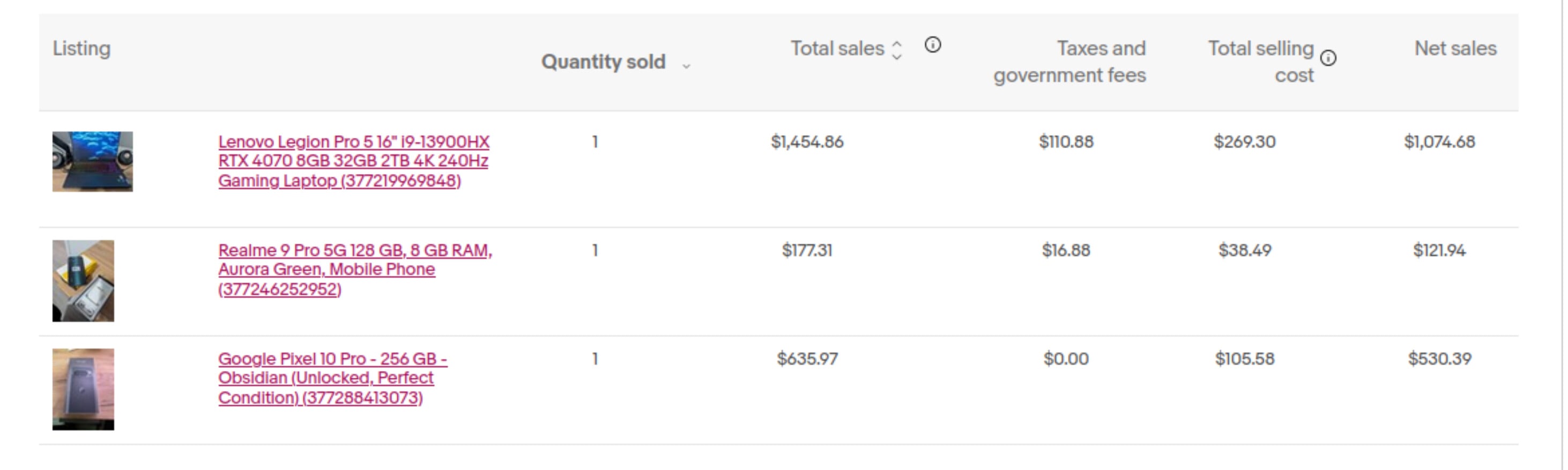
This is eBay… 35% losses to the platform.

1 Like

I like the idea. Back in the day there used to be a classified page where you can sell stuff, just curious why not make something like that again as opposed to building a full selling platform?

1 Like

I feel you on this. Same story here.

I will definitely list some things.

3 Likes

Full, full platform.

  • Stripe (Banking, Identity, Payments)
  • Shippo (Shipping Stuff)
  • gCloud
  • Cloudflare (D1, R2, Page, Speed, etc.)
  • Doppler (env)
  • Google Workspace (emails)
  • Jtech forums (auth)
  • My server (Ya know)
2 Likes

If you don’t mind me asking, is this something that’s supposed to be profitable for you/jtech? Not that I’m against that (aderaba we should all make money :slight_smile:) just curious

Not gonna make “money” but gonna make some money. yes. with volume.

3 Likes

I assume most online platforms charge fees for a reason, insurance, fraud, etc. If anyone could start a profitable esales company for less, someone would do it and undercut the competition. The important question to ask is what do you know that everyone else has missed?

Interesting. I got scammed on two items totaling $850 on eBay - i opened a thread about it on the forums here. Still didn’t get my money back. Even that seller is suspended. So if professional platforms charge more because of protection programs, it’s important to know that those companies protection programs suck.

I’m someone.

4 Likes

Yes, but

It’s an honest question; I’m not trying to put down your endeavor.

Nope. Maybe I’ll learn.

I’ll learn with time. For now it looks good, so I’m in. Dispute handling? We’ll figure it out.

Just make sure you have no financial liability for any of this. If it stays small enough, perhaps it won’t have all the fraud of the bigger platforms and can run at a lower cost.

ID verifications from end to end. People have an issue? “You two go fight it out” (powerful privacy policy)

2 Likes

That’s a good start, but we know it won’t prevent all fraud. I guess just make it very clear that you’re a platform like Facebook marketplace without any real buyer protections. I’ve made purchases on small forum marketplaces just like that; it can work out mostly on the honor system iif everyone’s part of a little community.

3 Likes

Technically, you can say that about any marketplace on the internet. Every platform operates on trust and probability. There’s always a chance that a transaction goes well, and there’s always a chance that someone attempts to scam another user.

I’ve made around 20 purchases on eBay throughout my life. Two of them turned out to be scams.

Does that mean eBay is a scam? Of course not. Scams happen. No platform can guarantee they’ll never occur.

The best defense against fraud isn’t simply offering refunds—it’s verifying who people actually are. That’s why services like Stripe Identity, Persona, and similar providers exist.

My marketplace requires identity verification. eBay generally does not.

So if someone says they won’t use my platform because “there might be scams,” I’d argue there’s at least as much risk on any mainstream marketplace. The difference is what happens afterward.

People often point to buyer protection programs, but in my own experience they aren’t foolproof. I still didn’t recover my money—not from the marketplace, not from PayPal, and not from anyone else.

I also think there’s a misunderstanding of what I’m offering. The claim seems to be that I’m providing no security. In reality, I’m doing the opposite.

I’m providing strong identity-based security. That doesn’t automatically guarantee a refund in every dispute, because sometimes there simply isn’t enough evidence to determine who’s telling the truth. But if someone commits fraud, they’re not anonymous.

If it reaches a true dead end, you can file a report with your local police’s non-emergency line or the appropriate government agency. With the proper legal documentation, I can request the verified identity information from Stripe through the appropriate legal process.

I have no issue cooperating with legitimate law enforcement requests.

Knowing exactly who committed the fraud is far more powerful than dealing with an anonymous account that disappears.

There is no way to bypass the identity verification requirement.

In that sense, I believe my platform provides stronger accountability than many larger marketplaces.

And that’s only the absolute worst-case scenario.

If I can prevent the payout from being released, reverse a payout where possible, recover funds through the payment processor, or otherwise resolve the issue financially, I’ll absolutely do everything I reasonably can before it ever reaches that stage.

The identity verification process is the last resort—used only when every other option has been exhausted. For example, if months have passed, the seller has already been paid, both parties give conflicting accounts, there is no remaining money to recover, and there is no objective evidence proving either side’s claim.

At that point, the dispute can move beyond the platform and into the legal system, where verified identities matter.

I hope that clears up my position.

6 Likes

In any case, fraud isn’t my biggest concern right now. My priority is making sure the entire platform works flawlessly from end to end.

This is a massive project. There are countless workflows, edge cases, menus, guides, and “if this, then that” scenarios that all need to function correctly. Getting the framework right is the most important thing.

My plan is to roll it out gradually. Early users can be cautious and help test the platform as it matures. Initially, I won’t charge any marketplace fees. Users will only cover Stripe’s processing fees and, if necessary, a few third-party API costs—essentially just pennies.

Once the core marketplace is stable, the next step will be storefronts for businesses. After that, I’ll focus on bringing in Chinese manufacturers, and eventually expand to a larger international audience.

I’m not trying to compete with eBay. My goal is to build a marketplace for people who want to sell without giving up a huge percentage of every sale.

5 Likes

This haya gotta do it sometimes…

2 Likes