Here are some other articles regarding this from there
#1
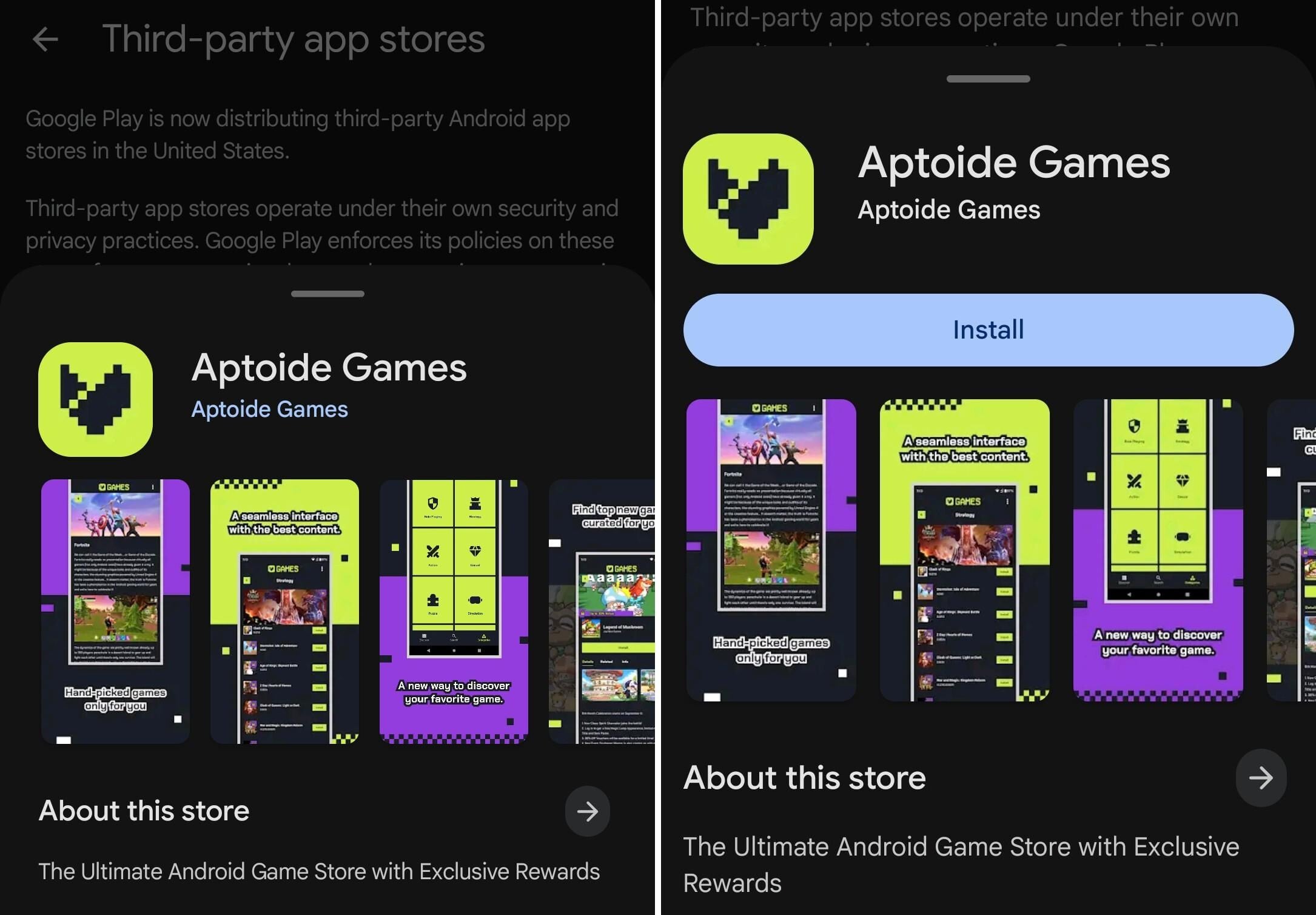
Following the latest twist in Google’s legal battles with Epic, US Android users are now able to open Google’s Play Store and download a third-party digital store with its own selection of apps. Aptoide, a store specializing in mobile games, is the first to become available.
Third-party app stores have always been available on Android, which is a more open platform than iOS in that respect. However, until now they’ve only been available if pre-installed on a device — as with the Amazon Appstore on Fire tablets or Samsung’s Galaxy Store — or installed via sideloading. Listing rival storefronts within the Play Store makes them much easier for users to find and access.
The change is a direct result of Google’s litigation with Epic, which saw a judge rule in 2024 that the Play Store would have to open up to third-party stores. Google appealed the ruling, delaying its implementation, and after losing its appeal made a deal with Epic for a new global solution to the problem. Judge James Donato expressed repeated skepticism about the two companies’ joint proposal though, and last month they dropped it, finally paving the way for app stores to open.
Aptoide itself is relatively little known, but it’s likely to be the first of many alternative app stores. It’s presumably only a matter of time before the Epic Store makes its own appearance, and the likes of Amazon, Samsung, and other phone manufacturers may also want to put their stores in front of potential customers. It also opens the door to Microsoft’s long-gestating Xbox mobile store.
Aptoide is only available through the Play Store in the US, though it can be sideloaded on Android worldwide. The company also operates an iOS app store in the European Union, Japan, and Brazil, following Apple policy changes forced by legislation in those markets.
As part of its deal with Epic, Google had announced plans to launch a Registered App Store program worldwide. Those plans appear to still be in the works outside the US, raising the possibility that in the near future there will be two different methods to access third-party Android app stores depending on where you live.
#2
Epic Games and Google have just jointly withdrawn their attempt to retroactively settle the lawsuit that’s changing how Android app stores work in the United States — and that means Google will be forced to carry rival app stores inside of its own. In fact, Google tells the court, it’s ready to begin carrying third-party app stores on Wednesday, July 22nd. Does that mean it’s time for Microsoft to launch an Xbox game store on Android?
In October 2024, Judge James Donato originally agreed that forcing Google to carry rival Android app stores within its own Google Play store for several years, and forcing it to share its own entire catalog of apps with those stores, would be the best way of undoing the company’s illegal monopoly over Android applications. Google has been fighting that ever since, and eventually convinced Epic to join in, by settling all their legal disputes around the world and making a secret $800 million deal along the way.
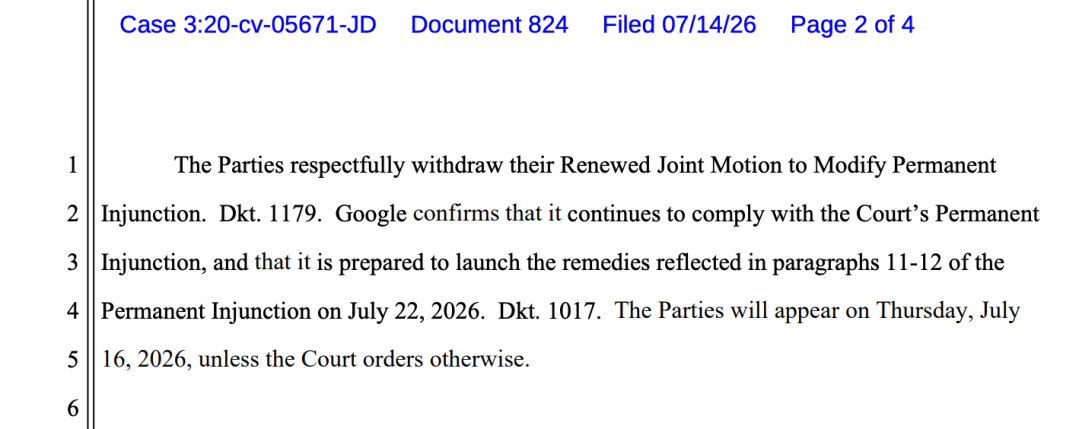
“The parties respectfully withdraw their renewed joint motion,” reads the text, adding that Google “is prepared to launch the remedies reflected in paragraphs 11-12 of the permanent injunction on July 22nd, 2026.”
Today’s legal filing in its entirety. Paragraphs 11 and 12, named above, are the ones that force Google to carry rival stores inside its own store and share its app catalog. Image: US District Court
But Judge James Donato was skeptical he should abandon his original permanent injunction in favor of Google’s proposed “Registered App Stores” that users would have to sideload — instead of simply downloading third-party stores directly through Google Play. On Thursday, July 16th, both parties were set to appear in court to argue it again, but that may no longer be necessary.
Here’s Google’s full statement on withdrawing its proposed modifications to Judge Donato’s permanent injunction, via Google spokesperson Dan Jackson:
We’ve agreed with Epic to withdraw our motion to modify the US Court’s injunction rather than prolonging this process which creates uncertainty for the ecosystem. This allows us to focus on executing our recently announced global business model evolution to deliver greater app store choice, lower prices, and more opportunities for developers and users. We remain committed to maintaining Android’s industry-leading security and fostering a competitive ecosystem where every app store and developer has the freedom to compete. In parallel, we continue to comply with the US Court’s injunction.
Google had previously announced that it would launch its sideloaded Registered App Store program in the rest of the world, beginning with the new version of Android later this year. That means there may be two different tracks for Android: stores-within-a-store in the United States and Registered App Stores everywhere else.
Google is already informing US app developers that their apps and game listings will automatically be provided to third-party app stores starting July 22nd, unless they opt out, and it’s launched a specific page for its Play Catalog Access Program for third-party app stores to enroll.
It’s not yet clear if there will be a parallel “program” for third-party app stores inside of the Google Play Store, or if companies will simply submit them the way they’d submit any other app. Technically, the court’s permanent injunction states that Google “may not prohibit the distribution of third-party Android app distribution platforms or stores through the Google Play Store,” not that it has to proactively invite them in.
For access to the Google Play catalog of apps, Google will charge stores an annual fee of $5,000 for “security and policy reviews,” and it has many additional requirements, including: stores can’t distribute apps outside of the US, have to be open to all eligible third-party developers, have “clear, non-discriminatory” trust and safety policies, and no more than 1 percent of “install attempts” can be malware.
It’s not yet clear how all the other economics around Android app distribution and billing might shake out yet — we may need to wait for more info — but Epic and Google have already set the world on a course for reduced fees and opened the Play Store to outside payments.
#3
Are you seeing a rival Android app store inside the US Google Play Store — or not?
Aptoide is the first third-party app store inside Google Play after Epic’s victory, but Aptoide CEO Paulo Trezentos tells me “I’d say 50% of people with a US account are not yet able to access it.” Most Verge staffers I’ve asked can, but a fully updated Pixel 9 review unit can’t. Google spox Dan Jackson tells me the feature is fully rolled out. Can you see it?
Does your phone show an install button?
#4
Epic v. Google: everything we learned in Fortnite court
The future of Google’s app store is at stake in a lawsuit by Fortnite publisher Epic Games. Epic sued Google in 2020 after a fight over in-app purchase fees, claiming the Android operating system’s Google Play store constituted an unlawful monopoly. It wanted Google to make using third-party app stores, sideloaded apps, and non-Google payment processors easier — while Google said its demands would damage Android’s ability to offer a secure user experience and compete with Apple’s iOS.
On December 11th 2023, the jury ruled in Epic’s favor, finding that Google has turned its Google Play app store and Google Play Billing service into an illegal monopoly, answering yes to every question in front of them about Google’s monopoly power, anticompetitive behavior, and the illegal ties between the different parts of its business. Here’s a rough summary of why the jury might have decided that way.
In October 2024, the judge issued his final, potentially monumental decision — cracking the Google Play Store open to rival stores for three years, among many other things. Google has successfully appealed all but one part of that decision. But Google and Epic have proposed a settlement that could reduce Google’s app store fees worldwide, and now, approval is in the court’s hands.
Disclosure: Vox Media, The Verge’s parent company, has filed a lawsuit against Google, seeking damages from its illegal ad tech monopoly.