if the don’t preserve the OPEN SOURCE / build your own binaries approach.
Basically, GPLv3 is saying that even if the source is public but if the platform is locked down so users can’t tweak the source and then deploy their changes, it is a violation of the license - even if they provide the source.
You mean that you want comapnies to open source their changes, or you want companies to allow users to be able to run their own modified versions on kosher phones?
If they regularly port in changes made by PRs to OS code, then they are not in violation of the license, because users can submit PR and eventually have their changes merged into the binary. (Debatable, admittedly). Also we all know that they steal tons of GPLv3 code and don’t give a hoot about anti tivoization. Besides, they can just tell claude to write it fresh for them the same way I did. I can publish the ST protocol for the advanced features (cool stuff coming after testing) and they can implement as well.
It’s befeirush in the GPLv3 that anyone distributing the software or any derivative on hardware must provide a method or tools for a user to install and run their own modified versions:
What do you gain from licensing it under GPLv3 instead of GPLv2?
That you can kvetch that companies stole your code?
The main difference between the GPLv2 and GPLv3 is that it requires anyone distributing the software on hardware, to provide methods to install and run modified versions.
We know that that won’t happen with kosher phones, and we don’t want that to happen.
Are you just putting this out for fun, or to push adoption?
If you want to push for adoption, then make it as easy as possible for anyone to put this on their phone.
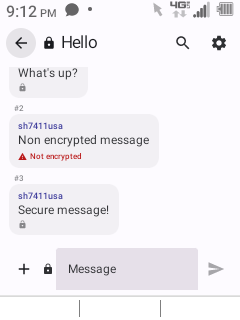
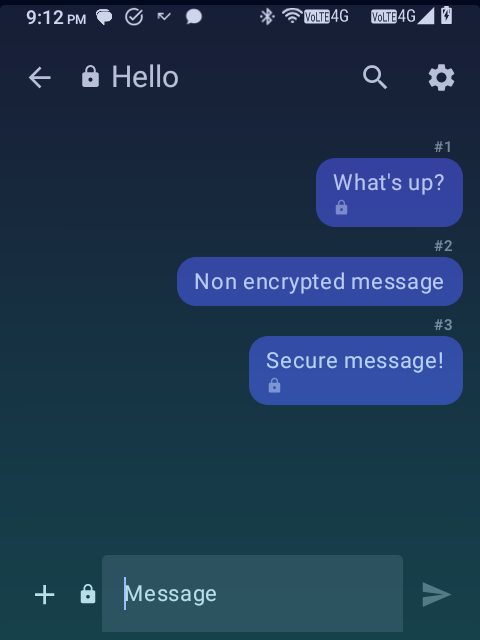
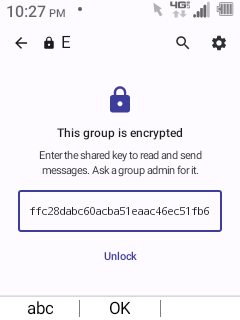
When an admin adds a user to an encrypted group, the encryption key is texted from the admin’s phone to the new user’s phone. Shliach tzibbur asks the user for the key, and decrypts the chat.
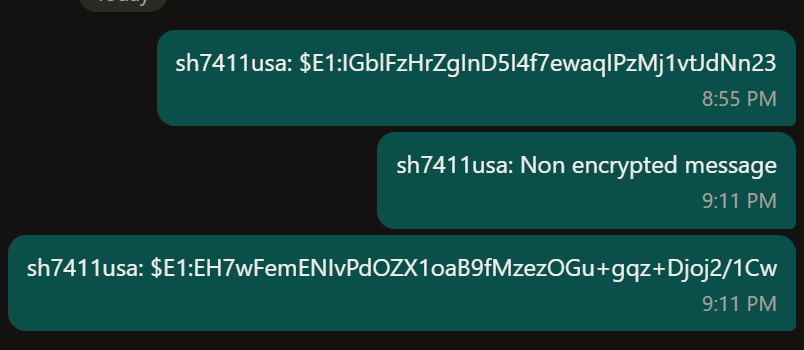
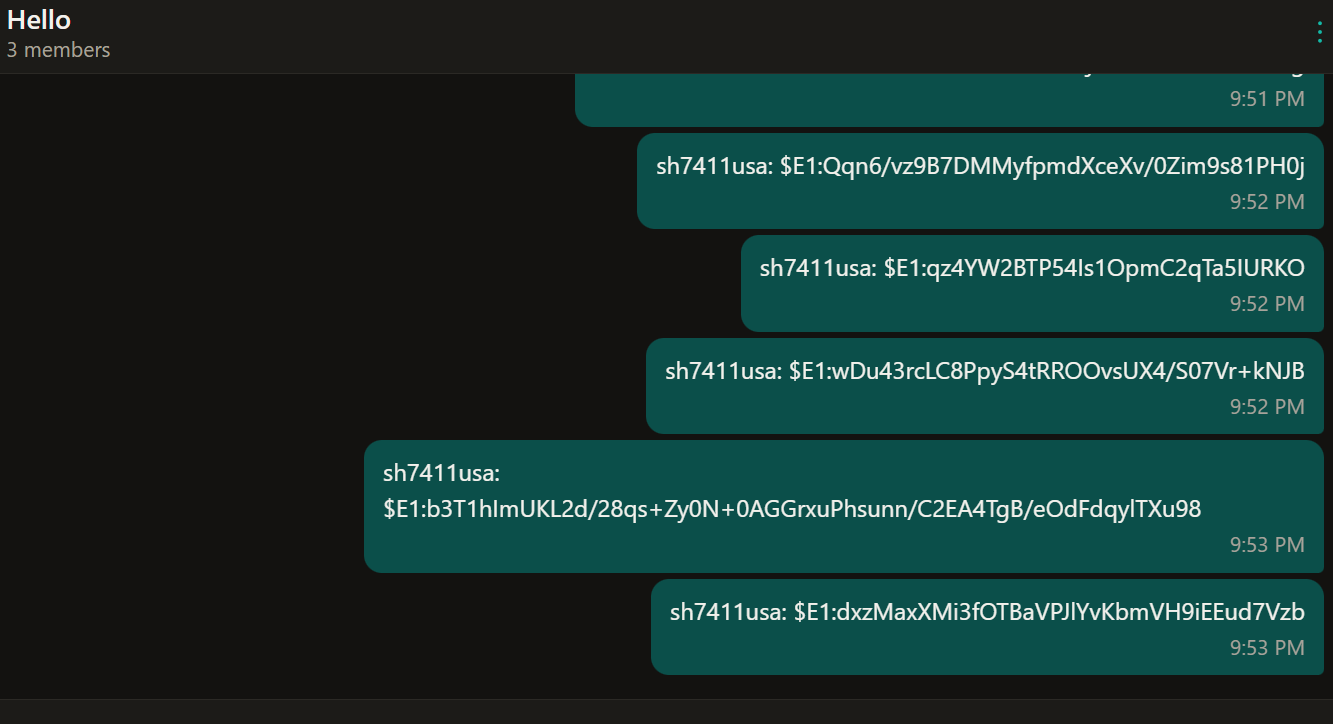
The current algorithm (denoted by $E1:) is secure (AES256GCM) but expensive in terms of the fact that short plaintext translates to long cipher text as can be seen in the screenshots, keeping users well below the 1000 char limit. (although the char counter auto adjusts for the cipher text while typing.) When I have time i’ll add $E2: which will use char flipping xor agains a derived keystream. Much less secure, but wont cost as much space. Then we’ll add something in the middle.
If anyone wants to implement outside of Shliach Tzibbur, the protocol is here. It seems the AI was really showing off when documenting the protocol.
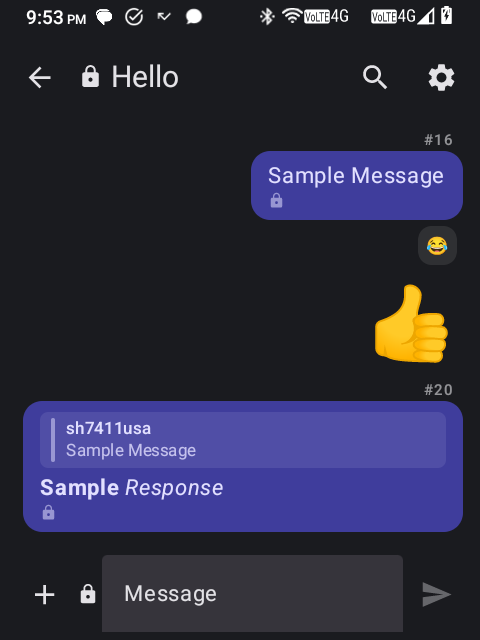
In addition to encryption, shatz now supports:
Message Count
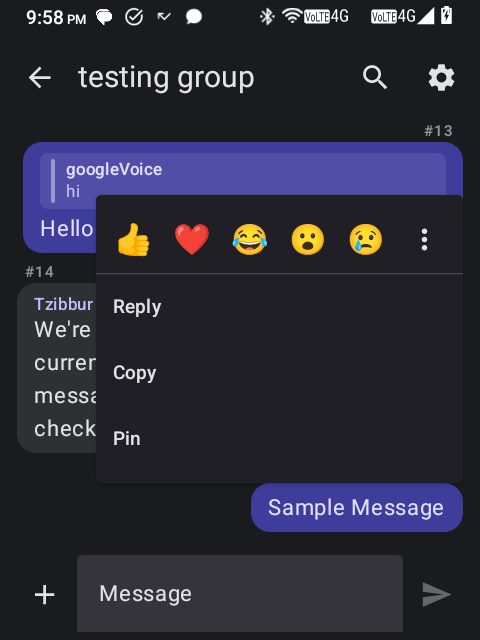
Long Press Menu (Copy/reply/react)
Attachments (Contact/Location, more to come.)
Inline link/email/phonenumber/geo support
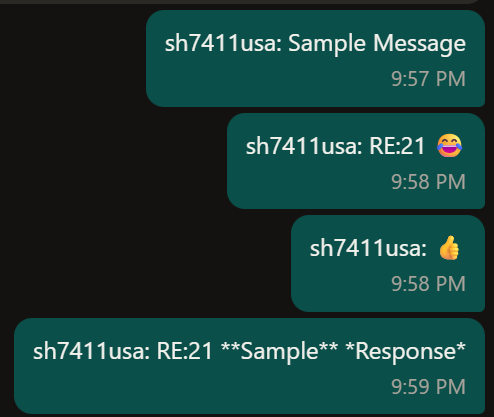
Basic Markdown Support
Search in Group/messages/contacts
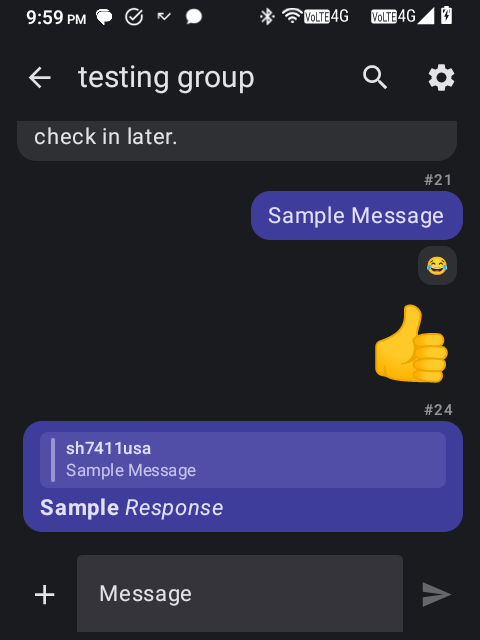
Inline Replies (Quotes reply to message)
Char Count while typing, accounts for tags and enc.
Cloudflare offers a nice free amount if you compress the media, and I thought that maybe you can make each user should need to use his own cloudflare account (or something like that)

 Shliach tzibbur now supports encryption!